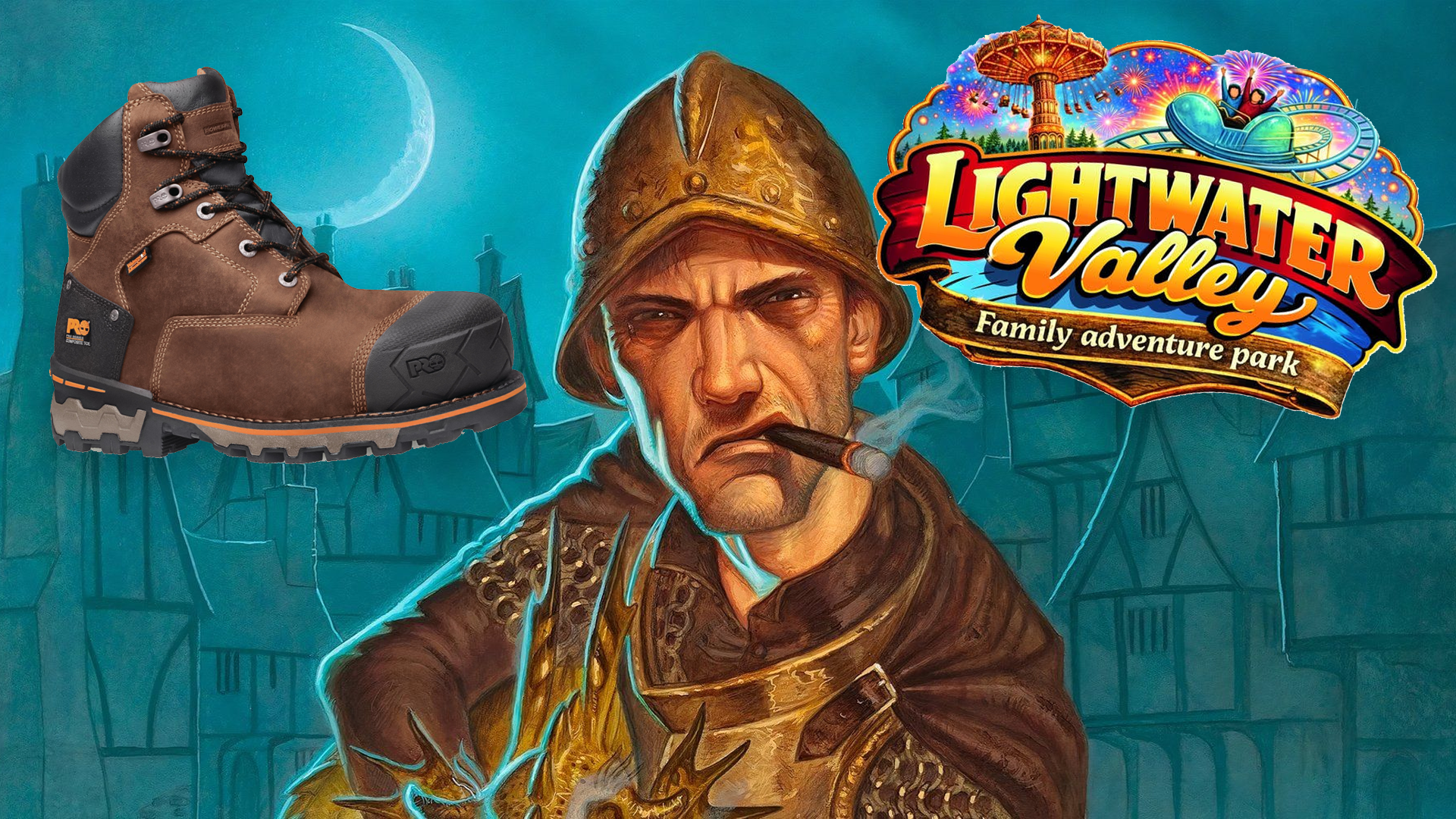
While on my holiday, I was reading a lot of Discworld. First time I'd ever delved into the world, as I had an...overzealous friend as a kid who put me off it for a bit. But, as you can probably imagine, I'm having a great time with it so far. I reckon this Terry guy is going to go far.
The character that has stood out to me so far, well, one of them alongside Death, has been Sam Vimes. He's a member of the Night Watch, and is dealing with moving from being working class his entire life to marrying into an upper-class lifestyle. And he has this - rather famous - theory about Boots. The Sam Vimes theory of socioeconomic unfairness, as it's called. It goes as follow
The reason that the rich were so rich, Vimes reasoned, was because they managed to spend less money. Take boots, for example. ... A really good pair of leather boots cost fifty dollars. But an affordable pair of boots, which were sort of OK for a season or two and then leaked like hell when the cardboard gave out, cost about ten dollars. ... But the thing was that good boots lasted for years and years. A man who could afford fifty dollars had a pair of boots that'd still be keeping his feet dry in ten years' time, while a poor man who could only afford cheap boots would have spent a hundred dollars on boots in the same time and would still have wet feet.
This was the Captain Samuel Vimes 'Boots' theory of socio-economic unfairness
This is, in a word, genius. And while it is supposed to a treatise on inequality - for which it works very well and I've used it in my daily life even before I read the books - I think it can also be applied to a lot more things. And case in point for this blog post: design. Because the broader point from the boots theory is: If you pay less, you end up paying more in the long run.
And when you're a Night Watchman you're forced in to the position of paying more, you only make $30 a month base pay, you can only afford the bad boots. But when you're in the position of running your own business, you tend to gravitate towards spending less out of a perceived sense of thriftiness, rather than survival. You want to spend the money on stuff that you think matters, like supplies, tools, PCs, office space. Stuff that's new and exciting. And then the design, the logos and branding and all that, is just thought of as the pretty bow on top of it all. But that couldn't be further from the truth. There's an adage in the design world: Cheap Design Is Expensive.
Because cheap design often just includes the visual elements of the brand. The logo, the colours, the fonts. The bits you can look at, think look good and sign off on. But the underpinning strategy, the coordination, the planning and things like accessibility considerations are usually the first things to get cut by cheap or DIY'ed design.
So what happens? It's the design equivalent of your cardboard soles wearing out: the brand performs badly. It's perceived as low-budget, as untrustworthy or just unappealing to the target audience. So you have to reinvest, do it again, waste more time remaking it or pay another designer to do it properly. And you end up spending more time and effort than you needed to in the first place.
For a prescient example of this, look at what is happening to Lightwater Valley. They revealed a brand new logo, the start of a whole new chapter...and have proceeded to spent the next 36 hours in damage control, with suspiciously AI-sounding responses to the backlash from their suspiciously AI-looking logo.
And you're either in one of two camps, with this design. Either you think it's AI and a bit shit, or you just think it's a bit shit. I don't know anyone that has seen this logo and thinks it's good enough, particularly not better than the previous logo it was replacing.
If it is AI, then they clearly cheaped out on the production of it, which is coming back to bite them in the ass, damaging their reputation and brand perception. Which, inevitably, will lead to them hiring a new agency to do it properly, ending up more out of pocket than they thought they were going to be, saving money on this AI abomination.
That, or they'll dig their heels in and their brand will continue to fall until they're just "that crappy little park up north nobody remembers". Mark my words, these are the two paths.
So, next time you're looking at refreshing a brand, buy the nice boots.